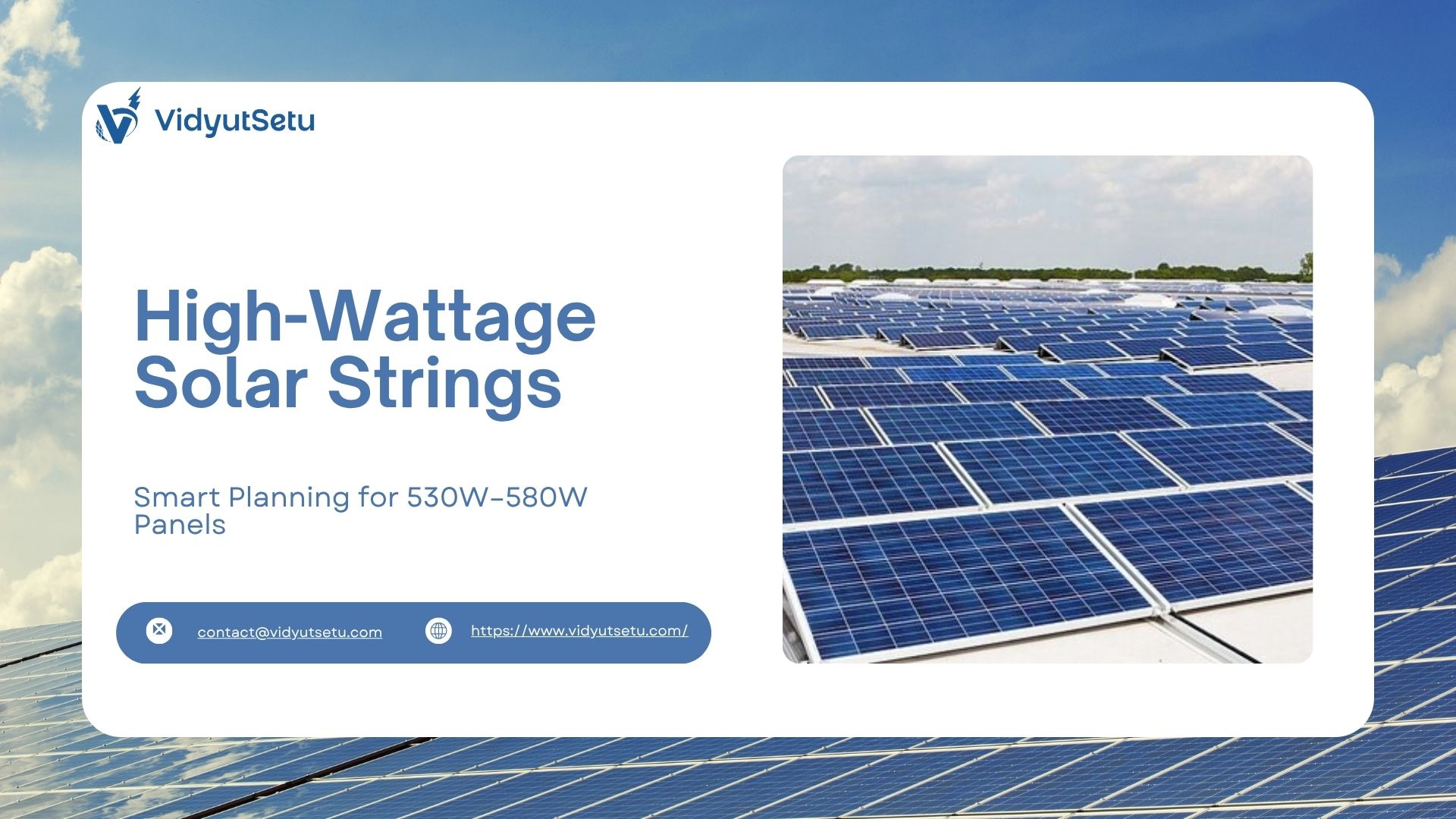
The bigger the better when it comes to solar energy. Not many years ago, an average solar panel generated 330W of power. Nowadays, when you open a solar kit, you actually get huge, high efficiency solar panels which make 530W, 550W or even 580W.
The advantage of these large panels is that you do not require as many of them to cover your roof. They however, have a technical challenge attached to them. They cannot be linked randomly. With too many in a row (a “string” you may blow up your inverter. Put less than that, the system will not even start.
This blog is an in-depth analysis of String Sizing. We will consider the mathematics and the reasoning you have to apply when handling such new, high power modules. This guide will make your system safe and efficient whether you are installing a small home system or you are planning to install a commercial solar power.
1. Understanding the “String” Concept
Imagine your solar panels are batteries of a torch. When you put them in a line (Positive of one to Negative of the other) it is referred to as a “String.”
In a string:
- Voltage Adds Up: When one panel produces 50 Volts, and you have 10 panels, you will have 500 Volt.
- Current (Amps) Stays the Same: If one panel gives 13 Amps, the whole string stays at 13 Amps.
The objective of string sizing is to ensure that your overall Voltage and Current is within the Safety Zone of your inverter.
2. The Two “Danger” Numbers: Voc and Isc
Each solar panel contains a sticker with technical information on the back of it. In the case of high efficiency solar panels with 550W range, you should consider two particular numbers:
Voc (Open Circuit Voltage)
This is the highest voltage which the panel may emit when it is not connected to a load. A 550W panel should have an approximate Voc of 49V to 52 V.
The Risk: In case your inverter is only capable of 600 V, and your string generates 650 V, the inverter will melt immediately the sun gets on the panels.
Isc (Short Circuit Current)
This is the highest current (Amps) that the panel can generate. The current era of large panels with a very high Isc is 13A to 18A. The
The Risk: When you are on a sunny day and have bifacial solar panels (that catches light on one side and one on the other side) the current will even increase further.
3. Temperature Math: The “Hidden” Variable
The following is a secret that many people forget; Solar panels are fond of the sun, but not heat.
- When it is Cold: The Voltage (Voc) goes UP.
- When it is Hot: The Voltage (Voc) goes DOWN.
Mornings during winter can be quite chilly in some of the areas in India. Assuming that you work out your string sizing by using a hot summer afternoon, your voltage may be too high on a cold January morning and kill your inverter.
The Simple Rule: You must always add a 10% to 15% Safety Buffer, in your voltage calculations, to take into consideration the spikes in cold weather. When you have an inverter that displays a maximum of 600 V, then strive to get a total panel voltage of approximately 520 V.
4. MPPT Planning: The Inverter’s Sweet Spot
Your inverter has a brain known as the MPPT (Maximum Power Point Tracker). Its best working place is its Window.
Let’s say your inverter manual says:
- Max Input Voltage: 600V
- MPPT Range: 120V – 550V
- Startup Voltage: 150V
When your end voltage is not high enough (e.g. just 2 panels): The voltage only will be about 100 V. The inverter will never start up, and will give zero power. When your string voltage is excessively large: There is a possibility that the inverter will work but it will overheat and wear out prematurely due to operating at the extreme of its operating limit.
In the case of a 5kW system and 550W panels (9 panels in total), two small strings may sometimes be not as good as a single string of 9 panels. Why? Since you have 9 panels putting you at about 450 V which is right in the center of that 120 V -550 V window.
5. Dealing with Bifacial Solar Panels
Many modern commercial solar power projects now use bifacial solar panels. These panels have glass on both sides. They catch direct sunlight from the top and reflected light from the roof on the bottom.
Technical Tip: Bifacial panels can produce up to 10% to 20% more current (Amps) than their sticker says. When stringing these, you must check your inverter’s “Max Input Current.” If your panels produce 15A and your inverter only takes 12A, you are wasting the benefit of the bifacial technology.
Always choose an inverter that can handle high-current input (15A or 20A per MPPT) when using these advanced modules.
6. The Installer’s Checklist for High-Wattage Strings
Before you finish your solar kit installation, run this mental check:
Count the Panels: Does the total Voc (Panel Voc x Number of Panels x 1.1 safety factor) stay below the Inverter Max Voltage?
Check the Amps: Is the Panel Isc lower than the Inverter’s Max Input Current?
Check the Minimum: Is the total voltage on a hot day still higher than the Inverter’s “Startup Voltage”?
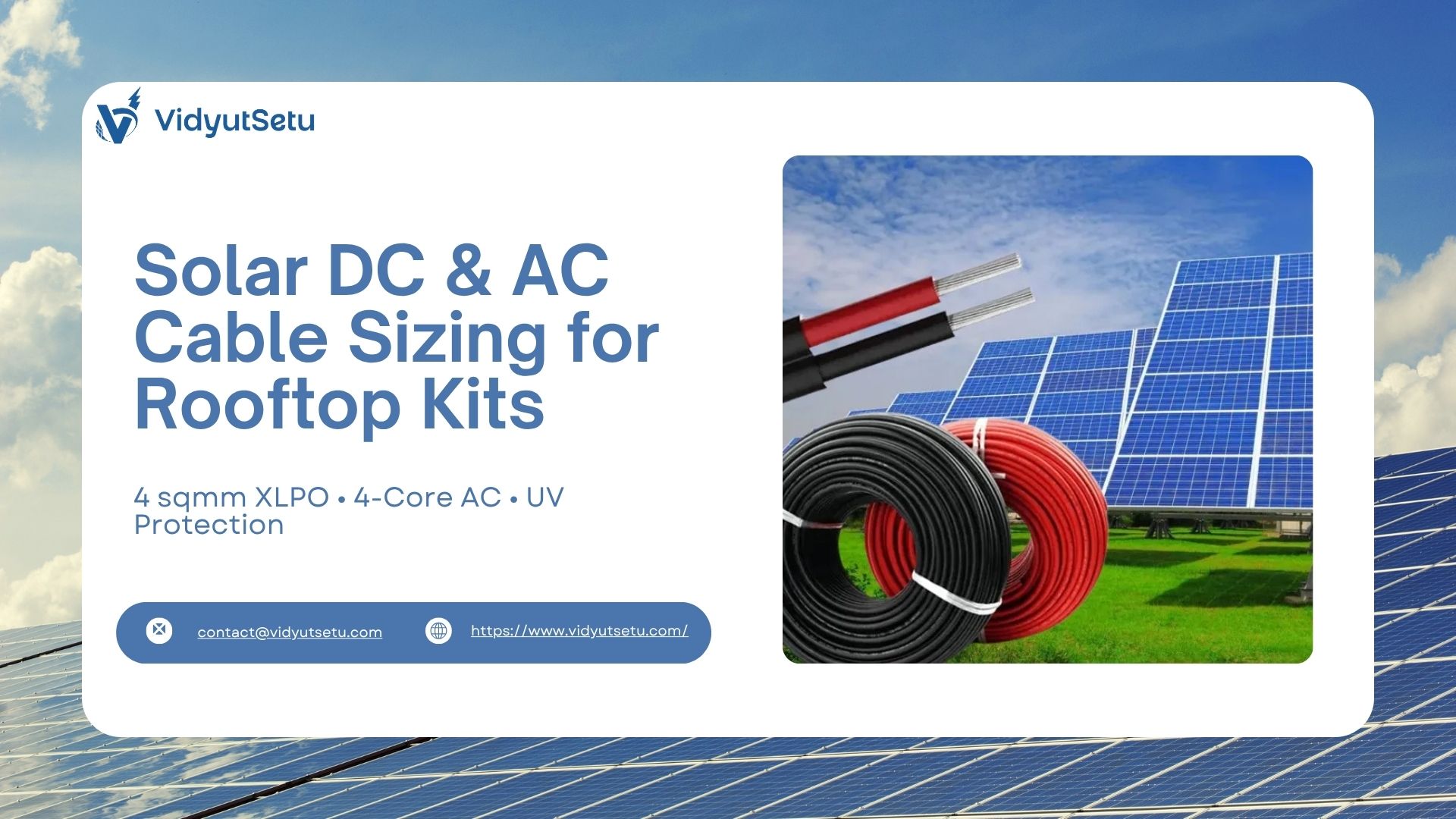
Cable Thickness: Big panels produce a lot of current. Use 4sqmm or 6sqmm DC cables. Thin wires will get hot and might melt.
Why Small Mistakes Lead to Big Losses
In a 3kW or 5kW system, even one “wrong” panel in a string can reduce the performance of the entire system. Solar strings are like a chain, they are only as strong as their weakest link. If one panel is shaded or if the string voltage is slightly off, your ROI (Return on Investment) will drop from 4 years to 6 years.
Planning the string size correctly ensures that your high efficiency solar panels actually deliver the savings they promised on the box.
Get the Perfect Fit with VidyutSetu
High-wattage panels are the future, but they require expert engineering to work correctly. You shouldn’t have to worry about Voc limits or temperature math, that is our job.
At VidyutSetu, we specialize in the “Science of Solar.” We don’t just sell hardware; we design high-performance energy systems for homes and businesses across Navi Mumbai.
Ready to install the latest 580W solar technology? Contact VidyutSetu today for a free technical consultation and a customized string-sizing report for your property!