Earthing is the component that no client asks about, no sales pitch mentions, and no photograph ever shows. It sits underground, invisible, doing nothing, until the moment it has to do everything. A rooftop solar kit without a correctly specified solar earthing kit isn’t just non-compliant. It’s a system waiting for the wrong monsoon.
A correctly installed solar earthing kit for a rooftop system requires copper-bonded earth rods (minimum 1.2 metres, 17.2mm diameter), FRP-enclosed earth pits with inspection covers, and a measured earth resistance below 5 ohms for residential and below 1 ohm for commercial installations.
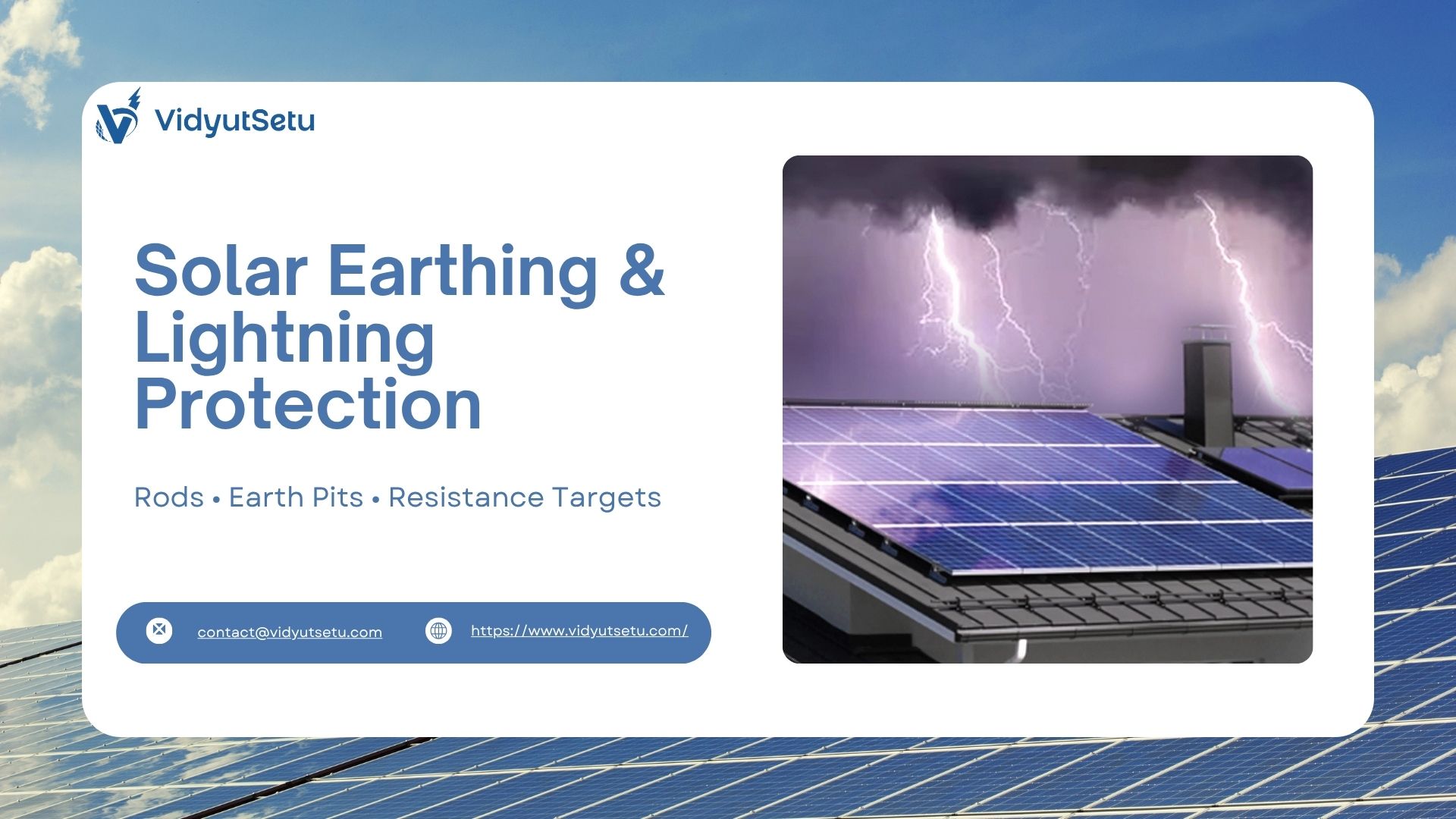
Lightning protection is separate from earthing but shares the same conductor path. Skipping or undersizing either creates equipment damage risk, inverter failure, and in direct strike scenarios, structural fire.
The cost of a complete solar earthing kit is Rs. 4,000 to Rs. 8,000. The cost of skipping it is the entire system.
The Problem With “Earthing Is Standard”
Ask any installer if they do earthing. The answer is yes, always.
Ask them what resistance value they achieved. Silence, or a confident-sounding number with no instrument behind it.
Ask them what the earth pit looks like, what the rod material is, whether the bonding conductor is continuous copper or a splice of aluminium and copper with a brass lug pressed in between. Now you’ve lost them.
“Earthing is standard” is the phrase that precedes every earthing-related failure. It’s not standard. It’s a system with defined components, defined resistance targets, and defined inspection requirements, and the solar industry in India treats it like a formality because it’s underground and invisible and the DISCOM inspector rarely tests it with a clamp meter.
That invisibility is exactly what makes it dangerous.
What a Solar Earthing Kit Actually Contains
The solar earthing kit is part of the broader solar BOS specification. It doesn’t get a line item in most rooftop proposals, it gets bundled into “miscellaneous materials” or absorbed into the installation cost. That’s the first signal that a project is being specified for the quote, not for the system.
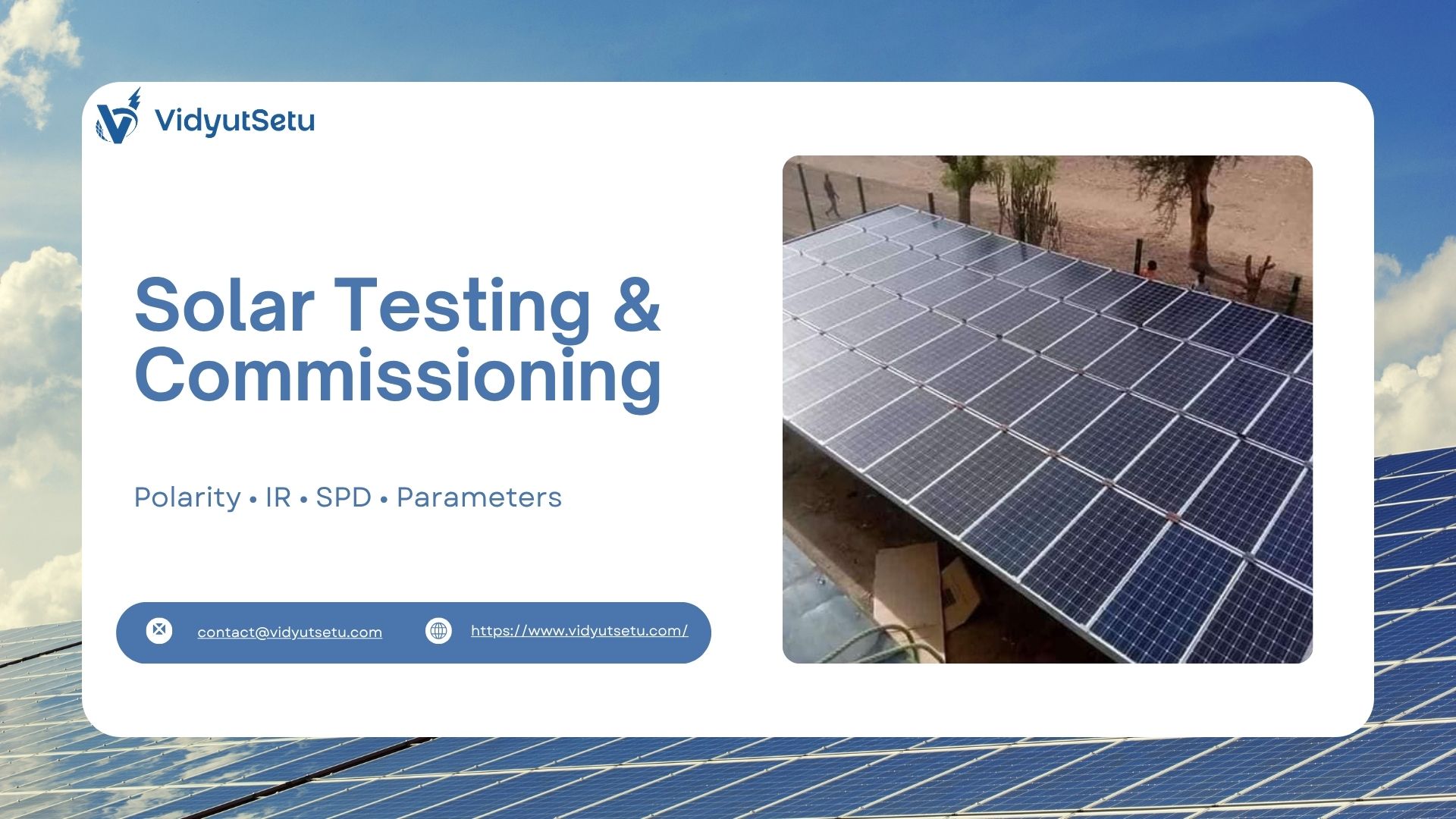
A complete solar earthing kit for a residential 3kW rooftop system includes:
| Component | Specification |
| Copper-bonded earth rod | 1.2 to 3.0 metres, 17.2mm diameter, 250 micron copper bonding |
| FRP earth pit chamber | 300mm diameter, with cast iron or HDPE cover |
| Earthing compound (bentonite / GEM) | For reducing soil resistivity around the rod |
| Earth continuity conductor | 6 sqmm bare copper or 16 sqmm GI strip minimum |
| Inspection cover and filling funnel | For periodic watering and resistance testing access |
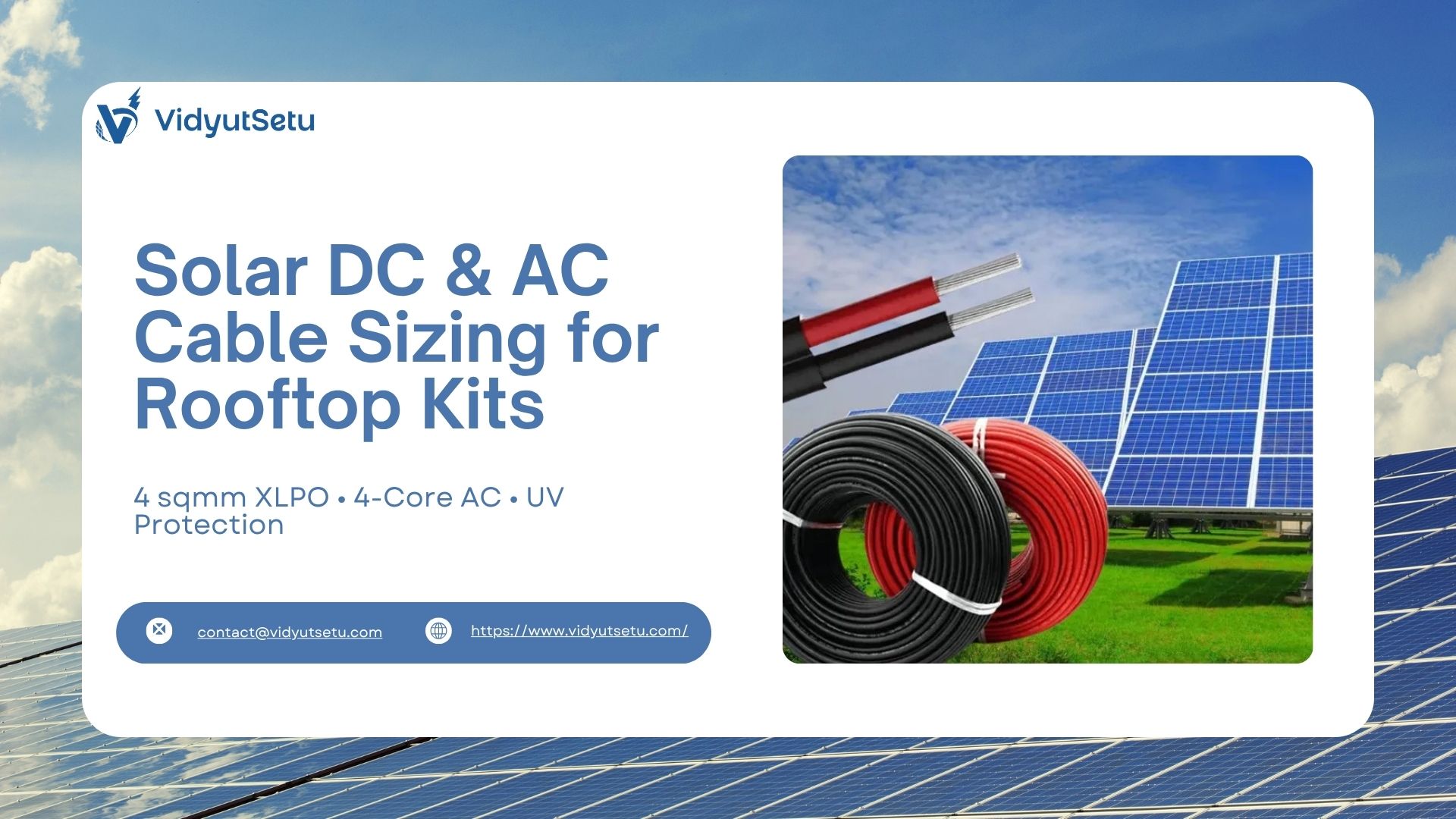
| Bonding conductors to panel frames | 4 sqmm green-yellow insulated copper to each module rail |
Each component has a reason. The FRP chamber prevents the earth pit from collapsing under terrace load or monsoon saturation. The bentonite compound reduces contact resistance between the rod and surrounding soil, critical in sandy or laterite soil zones common across coastal Maharashtra and Konkan.
The inspection cover is not cosmetic. It’s how you water the pit during dry summer months when soil resistivity climbs and earth resistance rises.
A solar earthing kit without an inspection cover is a solar earthing kit you can’t maintain. And an unmaintained earth pit in Maharashtra’s black cotton soil, which shrinks significantly in summer and swells in monsoon, can see earth resistance swing from 3 ohms to 22 ohms across seasons.
Copper-Bonded Rods: Why the Bonding Thickness Is the Number That Matters
The market is full of “copper earth rods” that are not copper earth rods.
A pure copper rod is expensive and, in most soil environments, unnecessary. What the industry uses, correctly, is a copper-bonded mild steel rod. A steel core provides mechanical strength for driving into hard soil. A copper layer provides the corrosion resistance and conductivity at the soil interface.
The copper layer thickness is where specifications diverge.
Standard IS 3043-compliant copper-bonded rods for solar earthing kit applications require a minimum of 250 microns (0.25mm) of electrolytic copper bonding. Below this, the copper layer corrodes through within 5 to 7 years in high-moisture or acidic soil, which describes coastal Maharashtra, almost all of Konkan, and most laterite-rich soils in the Western Ghats foothills.
A corroded earth rod still looks like an earth rod. The resistance creeps up invisibly. The system continues operating, seemingly normally, until a transient overvoltage event, a nearby lightning strike, a grid switching surge, finds no low-impedance path to earth and routes through the inverter’s DC bus instead.
Rod Length and Soil Type
Rod length directly affects the volume of soil in contact with the rod, which sets the floor for achievable earth resistance.
- Black cotton soil (Vidarbha, Marathwada): High clay content, good moisture retention. 1.2 to 1.5 metre rods typically achieve target resistance.
- Laterite soil (Konkan, Raigad, Sindhudurg): Good conductivity in wet season, poor in dry. 1.5 to 2.0 metre rods recommended. Bentonite treatment essential.
- Sandy coastal soil (Mumbai, Thane coastal belt): Low natural conductivity. 2.0 to 3.0 metre rods or multiple rods in parallel required.
- Rocky terrain (elevated Sahyadri zones): Rod driving is mechanically limited. Chemical earth electrodes (GEM-filled tubes) replace conventional rods.
The solar earthing kit specification should name the soil type. It rarely does. This is a design gap that shows up at commissioning when the resistance test fails and the installer has no remediation path.
Earth Resistance Targets: The Numbers That Actually Matter
The IS 3043 standard, India’s governing standard for earthing systems, specifies different resistance targets for different installation types.
| Installation Type | Maximum Earth Resistance |
| Residential solar kit (up to 10kW) | 5 ohms |
| Commercial ongrid systems (10kW to 100kW) | 1 ohm |
| Large commercial / industrial | 0.5 ohms |
| Lightning protection earth | 10 ohms (IS 2309 separately) |
These are measured values, not estimated values. The measurement tool is an earth resistance tester, either a dedicated 3-point fall-of-potential instrument or a clamp-on earth tester for installed systems with multiple rods.
A multimeter reading from rod to neutral is not an earth resistance measurement. It’s a continuity check, which is a different thing entirely.
For commercial ongrid projects, achieving 1 ohm in anything other than ideal soil requires planning: multiple rods in parallel (resistance drops approximately proportionally to rod count, but not linearly, two rods in parallel gives roughly 60% of single-rod resistance, not 50%), GEM-enhanced backfill, and adequate spacing between rods (typically 2x rod length minimum to avoid overlap in resistance zones).
The measurement should happen at commissioning. It should be documented. It should be repeated annually, or at minimum after the first dry summer season.
Lightning Protection: A Separate System, Not an Earthed Rail
This is the most common confusion in rooftop solar earthing discussions.
Equipment earthing and lightning protection are not the same system. They share a common earth electrode, the copper-bonded rod in the earth pit, but they serve different functions and must be designed separately.
Equipment earthing protects personnel from electric shock and provides a low-impedance fault current path that causes protective devices to operate. It’s always active. It carries fault currents in the milliamp to kiloamp range.
Lightning protection dissipates the energy of a direct strike, currents in the 20 to 200 kiloamp range, for durations of microseconds. The path must be direct, with no sharp bends that cause arc-over, minimum conductor length from air terminal to earth, and no shared path with signal cables or sensitive equipment conductors.
For rooftop solar kits, the primary lightning protection concern is not direct strikes to the panel array, panels present a relatively small cross-section. The concern is nearby strikes that induce transient overvoltage on the DC string through electromagnetic coupling.
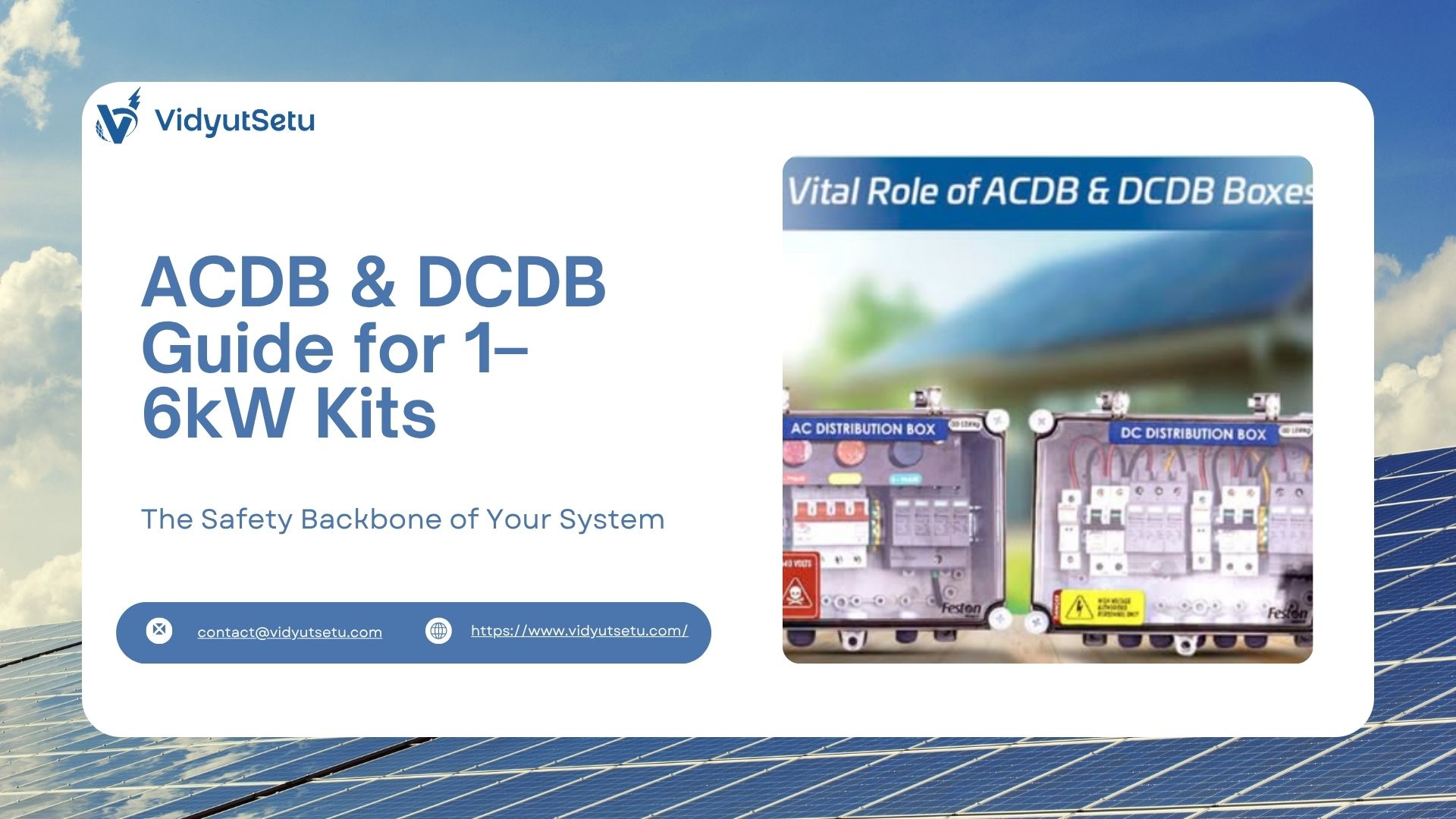
This is why surge protection devices (SPDs) at the inverter DC input are classified as part of the solar earthing kit specification in correctly-drawn BOQ documents. The SPD doesn’t earth the lightning. It clamps the voltage transient and shunts the energy to earth through the earthing system. Without a low-resistance earth path, the SPD has nowhere to send the energy, and protection fails.
The SPD Specification That Gets Skipped
DC SPDs for residential solar kit applications should be:
- Type II, rated for 1000V DC (or 1500V DC for larger arrays)
- Minimum 20kA discharge current rating (In)
- Pluggable cartridge design for replacement after strike event
- Installed at inverter DC input, with earth conductor directly bonded to the main earth bar
The Commissioning Sequence Nobody Follows But Everyone Should
A solar earthing kit is not complete at installation. It’s complete at verification.
The correct commissioning sequence for earthing and lightning protection is:
- Install earth rod and pit: before any other cabling begins.
- Measure earth resistance: with a calibrated instrument, using the 3-point fall-of-potential method. Record the value with date, instrument ID, and soil conditions.
- Verify bonding continuity: from each module frame rail, through the earthing conductor, to the main earth bar. Resistance should read below 0.5 ohms on any bonding path.
- Install and verify SPD: confirm SPD status indicator shows healthy, earth connection to main earth bar is direct and uninterrupted.
- Document and hand over: earth resistance test record, SPD installation photo, earth pit inspection cover access instructions, and annual watering recommendation.
Step 5 is the one nobody does. It’s also the step that protects you, as an installer, when the client calls two years later with an inverter failure and wants to know why.
What This Means for Every Project You Take
The solar earthing kit is not the visible part of the work. Clients don’t photograph it. It doesn’t appear in the brochure. The inverter gets the wall space. The panels get the roofline.
The earthing system gets the ground.
But every component it protects, the ongrid solar inverters, the solar BOS assembly, the panels, the metering infrastructure, is dependent on it performing correctly for 25 years. Not visibly. Not dramatically. Just continuously, underground, doing nothing until it has to do everything.
Specify it correctly. Measure it at commissioning. Document the result.
That’s not extra effort. That’s the work.
Why VidyutSetu Gets This Right
At VidyutSetu, earthing isn’t an afterthought in the BOS specification, it’s a line item with named components, soil-specific rod selection, and mandatory earth resistance documentation at every commissioning.
We’ve been installing rooftop solar across Maharashtra, from Navi Mumbai’s terrace apartments to Konkan’s laterite-soil agricultural sites, long enough to know what a poorly earthed system costs over a 10-year horizon. We’ve seen the inverter failures. We’ve traced the ground faults. We’ve excavated and reinstalled earth pits that were spec’d for a quote, not for the climate.
Every solar kit we design includes a complete solar earthing kit specification: copper-bonded rods matched to soil type, FRP chambers with inspection access, GEM-enhanced backfill in high-resistivity zones, and commissioned resistance values below 5 ohms, documented and handed to the client at project close.
If you’re planning a rooftop solar installation, residential or commercial, and your current quote doesn’t mention earth resistance targets, soil type assessment, or SPD specification, you’re not looking at a complete system proposal.
You’re looking at a system that works until the first monsoon makes it stop.
Talk to VidyutSetu. Let’s build it right the first time.