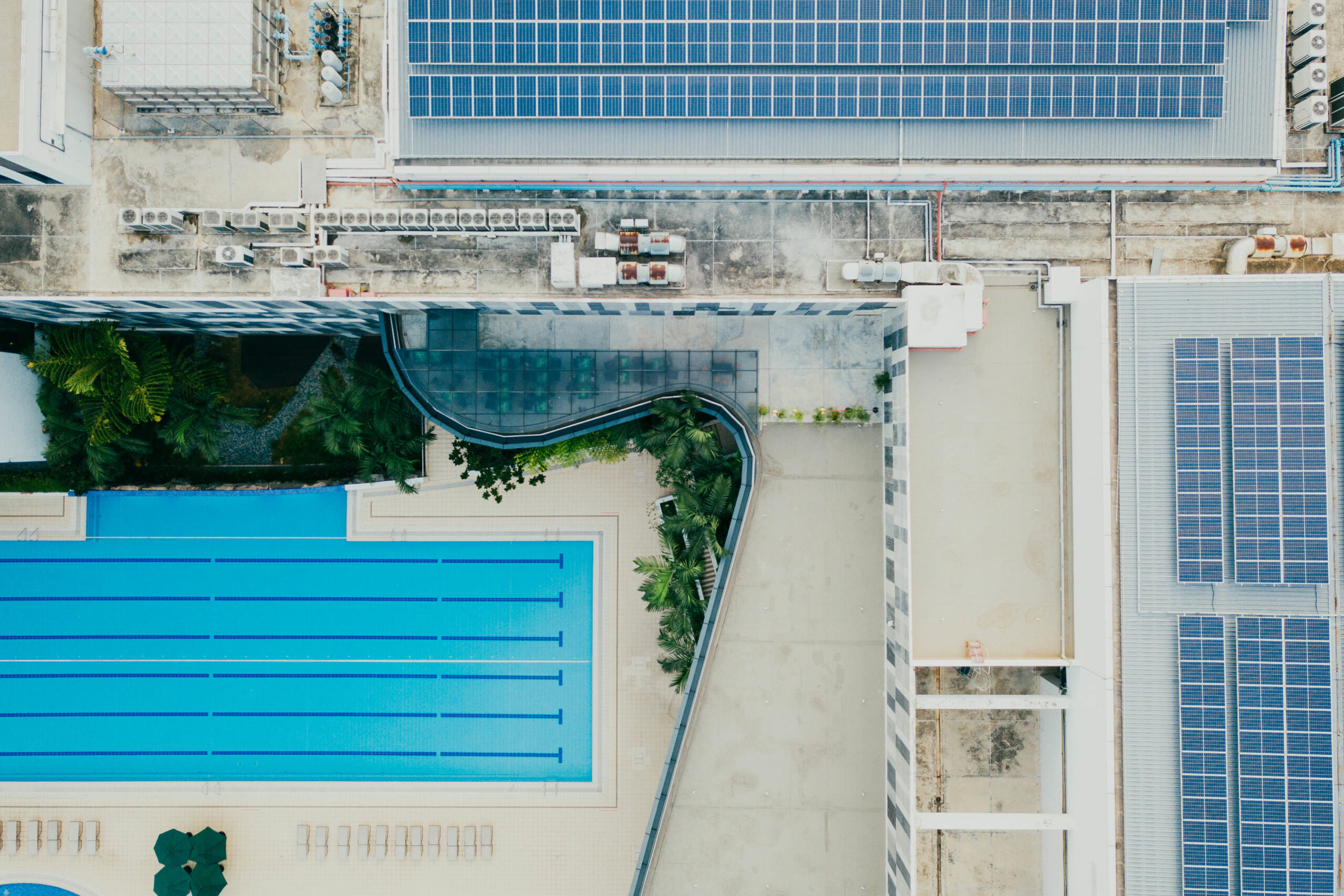
Commercial solar systems are becoming more common across India, and for good reason. With rising electricity costs, growing pressure to meet sustainability goals, and the financial benefits of going solar, many businesses are investing in rooftop or ground-mounted solar solutions.
But once you decide to go solar, one big question pops up: What exactly goes into a commercial solar system?
It’s not just about the solar panels. A complete solar setup has several important parts that work together, from inverters and junction boxes to mounting frames, cables, and the often-overlooked solar BOS (Balance of System).
This article breaks down each major component in easy words, so whether you’re a school owner, factory manager, hospital administrator, or SME business owner, you’ll walk away with clarity on what powers your solar rooftop.
1. Solar Panels: The Starting Point of Power
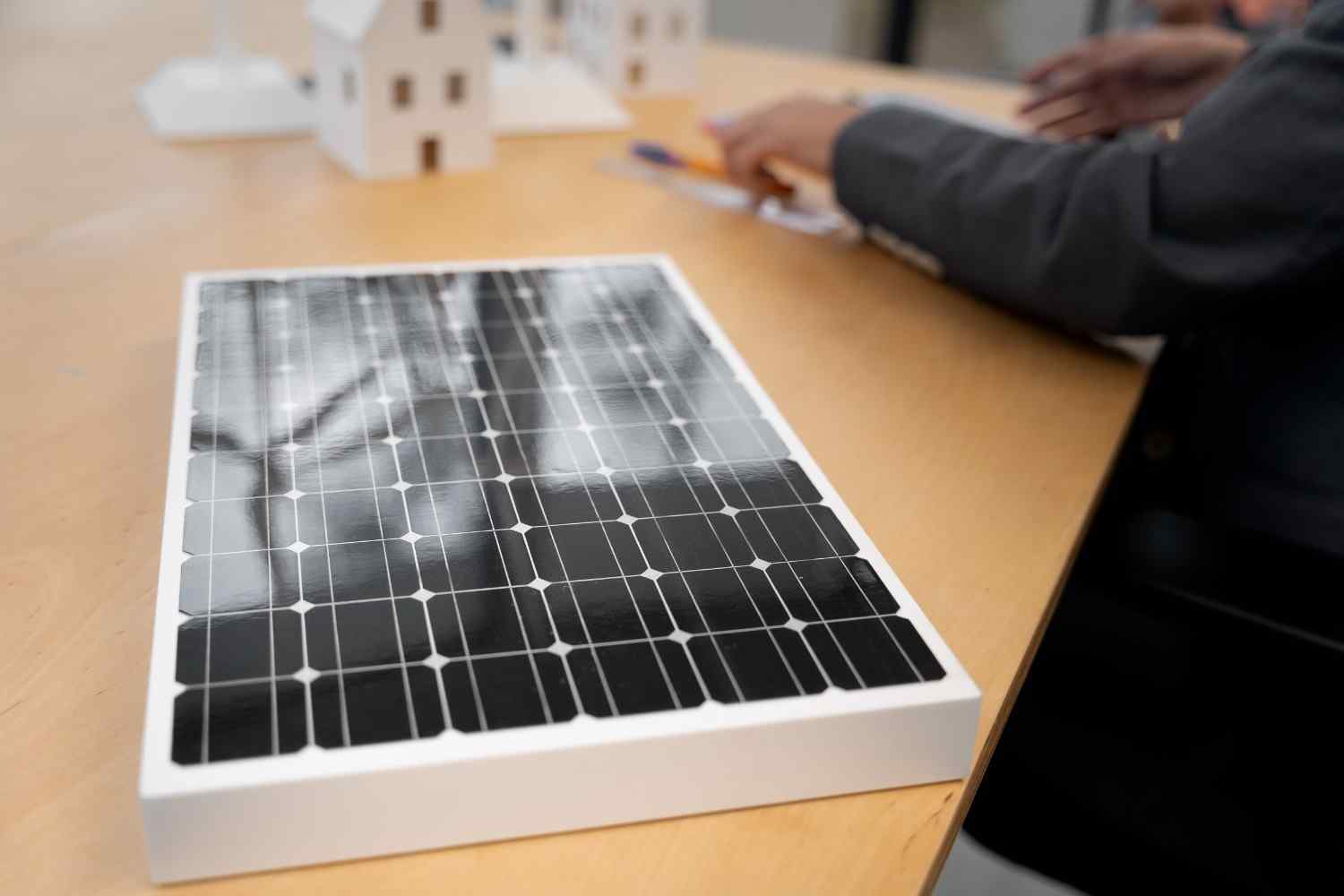
This is the part everyone knows, the flat, often blue-black panels mounted on the rooftop.
What they do:
Solar panels convert sunlight into direct current (DC) electricity.
Types used in commercial systems:
- Mono PERC (most common now)
- Bifacial (produces power from both sides if mounted on a reflective surface)
- TOPCon (latest, high-efficiency modules slowly entering the market)
For commercial setups, panels usually come in 540W to 670W capacity and are chosen based on available space and required generation.
Things to check before buying:
- Manufacturer warranty (usually 25 years)
- Efficiency rating (higher is better)
- BIS or MNRE certification
2. Ongrid Solar Inverters: The Brain of the System
Panels generate DC power, but your machines, fans, lights, and ACs run on AC (alternating current). That’s where the ongrid solar inverter comes in.
What it does:
- Converts DC power from the panels into usable AC power
- Connects the system to the electricity board (the “grid”)
- Allows net metering (if enabled)
- Handles system safety, shutdowns, and performance tracking
Common brands used in India:
Sungrow, Solis, Growatt, SMA, Delta
For commercial use:
Go for commercial ongrid inverters, larger capacity, better cooling, and remote monitoring features.
Features to look for:
- Efficiency rating (above 97% is good)
- Web or app-based remote monitoring
- Safety protections (over-voltage, overload, surge)
- Warranty (5 to 10 years)
3. ACDB and DCDB: Your Solar System’s Switchboards
These are called Distribution Boxes. They are crucial but often ignored when people talk about solar setups.
DCDB (Direct Current Distribution Box):
- Comes before the inverter
- Takes DC input from solar panels
- Combines, protects, and controls it before sending it to the inverter
- Includes fuses, isolators, SPD (surge protection device)
ACDB (Alternating Current Distribution Box):
- Comes after the inverter
- Distributes AC power to your electrical system
- Includes breakers, isolators, and SPD
Why they matter:
They protect your system from faults, overcurrent, and lightning. Without them, your system is unsafe.
Tip:
Always insist on quality DCDB and ACDB with branded components. A good inverter will not perform well if the distribution boxes are weak or poorly designed.
4. Mounting Structures: The Silent Support System
You might have great panels and a high-end inverter, but if the mounting structure is shaky, your system is at risk.
What they do:
Hold your solar panels in place. Keep them angled correctly to capture maximum sunlight. Resist wind and weather.
Types of mounting:
- RCC roof mount: Aluminium or hot-dip galvanised iron (GI) frame with ballasts or anchor bolts
- Tin shed mount: Elevated frames with clamps
- Ground mount: Steel frames with concrete foundations
Things to check:
- Wind speed tolerance (especially in coastal zones)
- Rust-proof coating (HDG or anodised aluminium)
- Correct tilt angle (based on location, usually 15–30°)
Good mounting = long life of your panels and higher safety.
5. Solar BOS (Balance of System): The Unseen Backbone
Solar BOS refers to everything apart from the panels and inverter. It’s the wiring, protections, fasteners, and more that make the system whole.
What it includes:
- DC and AC cables (solar-grade, UV-resistant)
- MC4 connectors (for safe plug-ins)
- Earthing system
- Surge protection devices
- Cable trays
- Junction boxes
- Fasteners, ties, and conduit pipes
- Monitoring sensors
A solid BOS setup ensures safety, reduces power loss, and prevents system failures.
Tip:
Don’t cut corners on BOS. Poor quality cables or earthing can lead to short circuits, voltage drops, or even fire.
6. Solar Earthing Kit: Grounding the Energy Safely
What it is:
A solar earthing kit grounds the current in case of faults, ensuring safety for both people and equipment.
What it includes:
- Copper or GI earth rods
- Earth pit material (charcoal, salt, or earth-enhancing compound)
- Earthing wire and lugs
- Earth busbar
Why it’s needed:
Lightning, surges, or faults can travel into the system. The solar earthing kit gives it a safe escape path into the ground.
In commercial systems:
Always plan for multiple earthing points, for panels, inverter, and structure, especially in large setups.
Why This Knowledge Matters
Understanding these components helps you:
- Ask better questions when hiring a solar installer
- Choose better quality parts that last longer
- Avoid hidden costs and maintenance surprises
- Protect your system, your people, and your power
Whether you’re setting up a 20kW system for a school or a 500kW system for an industrial plant, the components you choose decide how your system performs over the next 25 years.
Need Help Choosing the Right Setup? Use Vidyut Setu
If you’re planning a solar installation but feel overwhelmed by all the brands, component names, and technical terms, Vidyut Setu can help.
VidyutSetu.com is a smart and simple platform that helps Indian businesses understand and adopt solar confidently.
What it does:
- Explains commercial ongrid systems in easy words
- Helps compare installer quotes and component brands
- Breaks down panels, inverters, solar BOS, and wiring
- Offers guidance on solar subsidy projects
- Connects you with trusted EPC vendors
- Ensures systems are designed for real-world Indian conditions
Whether you’re leasing or buying, Vidyut Setu gives you clear guidance and reliable contacts, without sales pressure.
Final Thoughts
A successful solar installation is not just about buying panels and calling an installer. It’s about knowing what goes into your system, and why each part matters.
From solar panels and ongrid inverters to ACDB, DCDB, mounting, and BOS, each piece plays a role in generating safe, efficient, long-lasting commercial solar power.
With support from platforms like Vidyut Setu, you don’t need to be an expert, just someone willing to make smart, informed decisions.
Let your rooftop earn for your business. Make your system strong from the foundation.